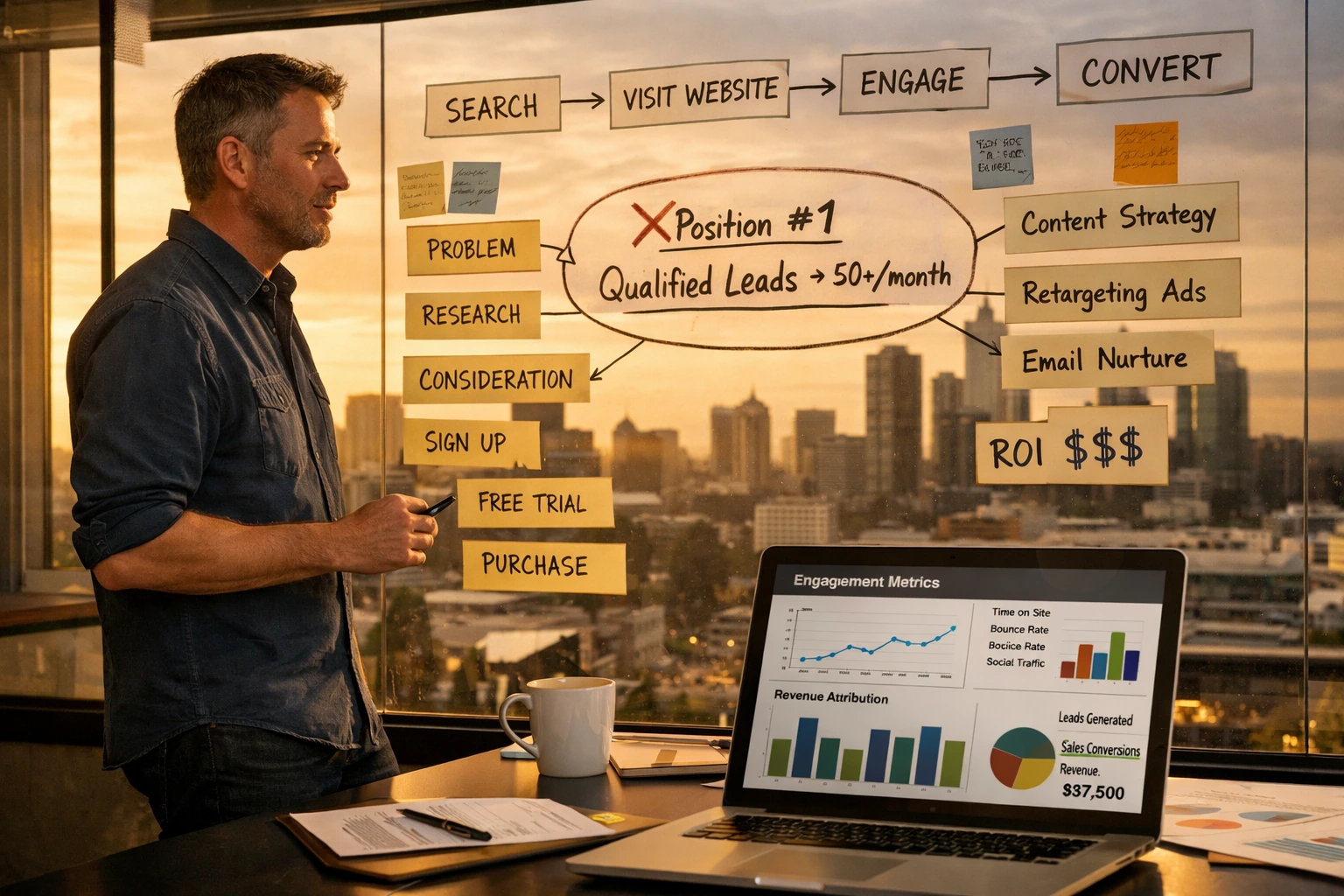
SEO agencies focus on rankings now because search engines show ads, AI overviews, and featured snippets before anyone even sees your organic listing. Basically, you can rank at the top and still lose traffic to Google itself.
That’s why businesses that chase positions alone can end up investing time and resources without actually attracting customers. For the same reason, modern SEO focuses on engagement, conversions, and bringing in qualified visitors who take action.
This article breaks down why rankings became unreliable, what modern SEO strategy prioritizes instead, and how to measure success using metrics that actually connect to revenue.
Let’s get into it.
Why Rankings Became Less Reliable as a Success Metric
Rankings used to be the ultimate SEO scorecard, but they’ve become too unstable and personalized to serve as your primary success indicator.
The main reason is algorithm updates. Google constantly tweaks its algorithm, moving the goalposts on what gets you to the top. So what worked last month might not work today. Your keyword rankings can shift daily, even when you’re following best practices and haven’t changed a thing on your site.
But here’s the bigger issue. Personalized search results mean different users see completely different rankings based on their location, search history, and device type. Your #1 ranking in Chicago might be #8 in Dallas. Check from your phone versus your laptop, and you’ll see different positions.
And then there are SERP features. Featured snippets, local packs, and knowledge panels now occupy the top spots where organic search results used to appear. Even if you rank #1, you might show up halfway down the screen.
What Google’s Search Results Actually Look Like Now
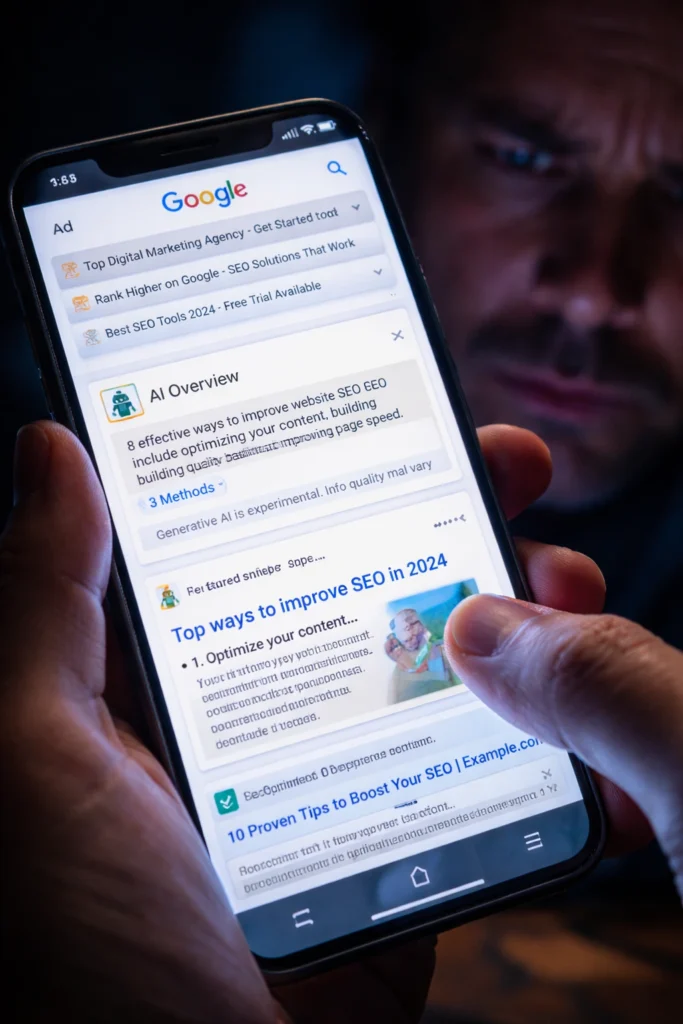
Google’s search results today show a mix of ads, featured snippets, AI-generated answers, and visual content, with organic listings often appearing further down the page. To break it down, here’s what typically appears on a modern SERP:
- Paid Ads Everywhere: Search for anything commercial on your phone, and ads fill the entire first screen. Your organic listing sits below the fold, buried under sponsored results that look almost identical to regular links.
- Instant Answer Boxes: Google now pulls featured snippets, knowledge panels, and People Also Ask sections straight into the results. Users grab their answer without ever clicking through to your website.
- Visual Content First: Video carousels and image packs take up massive space at the top of search results. Even a #1 ranking gets pushed down when Google prioritizes visual content over text links.
Ranking high doesn’t guarantee visibility when Google’s search results show everything except your actual listing first.
The Zero-Click Problem: When #1 Doesn’t Mean Clicks
You can rank #1 and still lose traffic to Google itself. Sounds backwards, right? In fact, nearly 60% of Google searches end without a click because answers appear directly in the search results. Users type in their search queries, see what they need in a featured snippet or knowledge panel, and move on. Your perfectly optimized page never gets the organic search traffic it deserves.
AI overviews make this worse. Google now generates answers using content from multiple websites and displays them at the top. So users get immediate information without visiting the actual sources.
Another problem arises with mobile behavior. When people search on their phones, they want fast answers. If Google provides them instantly, there’s little reason to scroll and click. Rankings stay the same, but click-through rates drop.
What Modern SEO Strategy Focuses on Instead of Rankings
Modern SEO strategy prioritizes two elements: matching content to user intent and prioritizing conversions over traffic volume. Let’s break down each one in detail.
1. Matching Content to User Intent
Effective SEO starts with understanding exactly what your audience wants when they search. Someone searching “best CRM software” wants comparisons and feature breakdowns, not a sales pitch. When your content matches that intent, you attract people ready to engage.
Once you nail the intent, depth becomes your advantage. Content depth signals expertise to both users and search engines. And to be honest, a 500-word surface-level post can’t compete with comprehensive guides that thoroughly address the topic.
When you provide real value, visitors stay longer, explore more pages, and that engagement tells Google your content deserves higher rankings.
2. Prioritizing Conversions Over Traffic Volume

Would you rather have 10,000 visitors who leave immediately or 100 who become paying customers? The answer is obvious. 100 visitors who convert will always outperform 10,000 who bounce.
That’s why track what counts: form submissions, phone calls, and purchases. These metrics reveal your SEO’s real business impact beyond vanity numbers.
The goal here is to target buyer-intent keywords to attract ready-to-purchase visitors instead of casual browsers. These searches indicate clear buying signals, leading to higher conversion rates from your organic traffic.
How to Measure Real SEO Success Using Google Analytics
You can measure SEO success in Google Analytics by tracking user engagement, conversions, and landing page performance. These metrics show whether your SEO efforts are actually driving business results. Here’s what to track:
- Session Duration and Bounce Rate: If visitors land on your site and leave within seconds, your content isn’t matching what they expected to find. Long session times and low bounce rates tell you people are actually reading and engaging with what you wrote.
- Goal Completions and Conversions: Tracking conversions shows how many visitors took the actions you wanted, whether that’s filling out a contact form, making a purchase, or calling your business. This is where you see your SEO’s dollar value instead of just vanity metrics.
- Landing Page Performance: Some pages attract qualified traffic that sticks around and converts, while others bring in visitors who immediately bounce. Identify which pages perform best, then replicate their success across your site. You can use Google Search Console to see which pages drive the most clicks and engagement, then model other pages after them.
These user behavior metrics tell you if your SEO strategy is bringing in the right people. Traffic without conversions is just numbers on a screen.
When Ranking Drops Don’t Actually Hurt Your Business
Imagine your rankings dropped to position 8, but you’re still getting the same number of leads. That’s because ranking positions can shift from one day to the next as Google tests different variables across its algorithm. These temporary fluctuations usually self-correct within 24 to 48 hours. As long as your traffic and SEO efforts stay steady, a minor ranking dip probably means nothing.
Still, context is everything. Losing keyword rankings for informational searches while maintaining positions for commercial keywords preserves your revenue-generating traffic. A user searching “what is SEO” likely isn’t ready to buy, whereas a search for “hire SEO agency near me” signals a ready-to-convert visitor.
And sometimes competitor improvements push your position down slightly across the board. If they publish better content or earn stronger backlinks, they might edge ahead. But if your organic search traffic and conversions stay steady, your SEO still works just fine.
Actionable Strategies for Modern SEO That Work
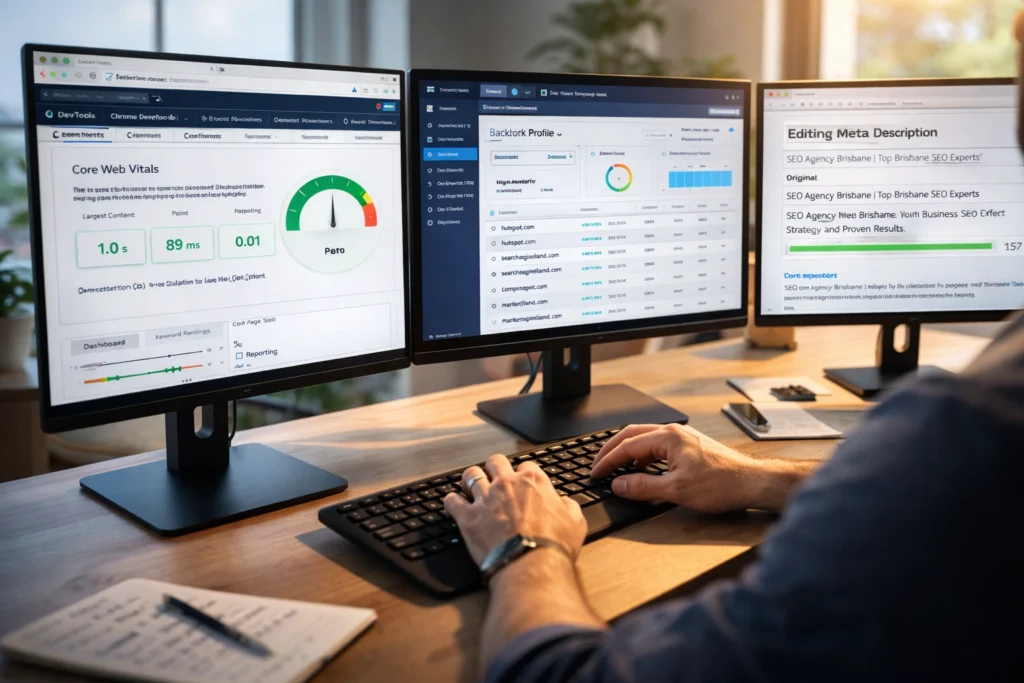
Rankings might be less important than they used to be, but that doesn’t mean SEO is dead. You just need to focus on the things that actually move the needle for your business, starting with these three:
- Optimize Core Web Vitals: Google cares about page speed, visual stability, and interactivity because your visitors do. When your site loads fast and doesn’t jump around while people try to click buttons, they stick around longer and actually convert.
- Build High Quality Backlinks: You need links from referring domains in your industry, not just any random website. Google sees these connections as votes of confidence from real experts in your field.
- Update Meta Descriptions: Your meta description is the first thing people read before deciding whether to click your link or scroll past it. A well-written description that directly addresses what searchers want to know can pull clicks away from higher-ranking competitors.
These strategies work because they prioritize user experience and business results over arbitrary position numbers. Focus on what brings customers through your door, not just eyeballs to the SERP.
Stop Chasing Rankings, Start Winning Customers
Rankings became unreliable because search engines changed how they display results. Zero-click searches, personalized rankings, and SERP features mean position #1 doesn’t guarantee traffic anymore. A smart SEO strategy focuses on attracting qualified visitors who convert instead of chasing arbitrary numbers.
Start measuring what actually drives revenue: user engagement, conversion rates, and organic traffic quality. Optimize for Core Web Vitals, build quality backlinks, and match your content to user intent. Those efforts deliver real business results that rankings alone never could.
Ready to build an SEO strategy that focuses on customers instead of positions? Get in touch and let’s talk about what’s working for your business.