Basic SEO teaches small businesses how to get found without relying on ads. And the best part is, you don’t need technical skills or special tools to start.
We’ve helped more than 100 local businesses do exactly that at Fiddlers Convention, so we’ve seen how simple it can be.
In this guide, you’ll see what small business SEO means, how local search works, and which steps you can take right now.
Read on to learn how to get more local customers to find you online.
What Is Small Business SEO?
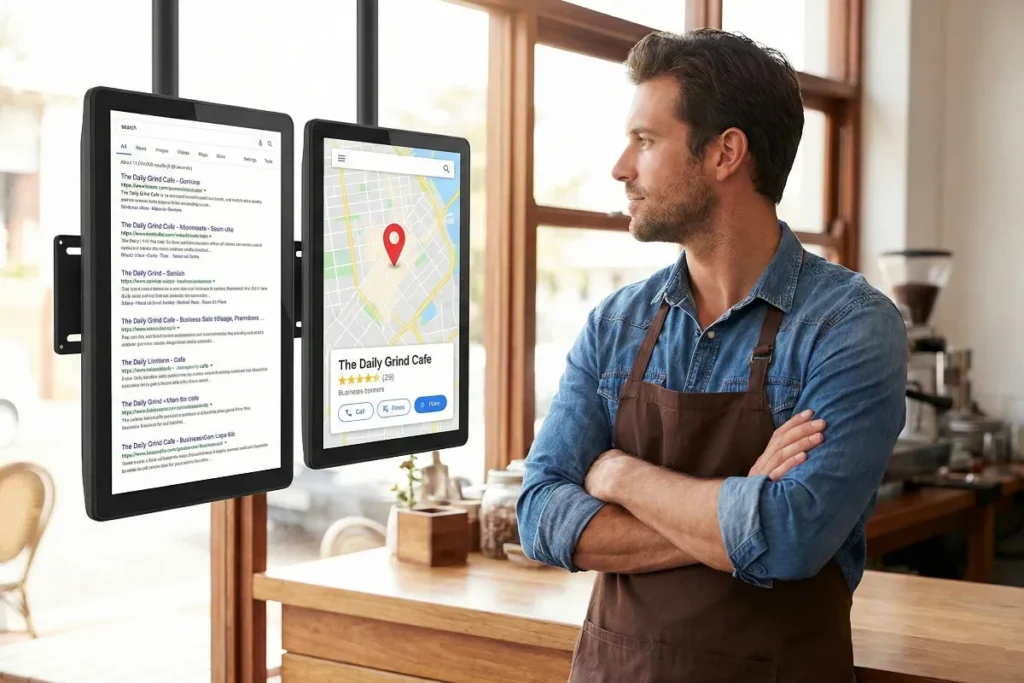
Small business SEO means improving your website and listings so nearby customers can find you when they search online.
We’ll now explain the difference between SEO and local SEO, followed by why you need search engines for your company.
SEO vs. Local SEO
Regular SEO is when you make your website easier for search engines to understand. It helps you appear on the results page the moment people type in different search queries.
For example, you might appear for searches like “easy dinner ideas” or “best running shoes”, which use broader relevant keywords that anyone might look up.
But local SEO prioritizes people close to you. This approach requires using location-based keywords and platforms like Google Maps. So, when nearby customers search for things like “coffee shop near me” or “best tacos in Phoenix”, you instantly show up in the search results.
Now, most small businesses with a physical location need both kinds of search engine optimizations. How does it work, though? Well, a dentist might blog about teeth whitening tips (that’s SEO) while also trying to rank for “family dentist in Boise” (that’s local SEO).
The Importance of Search Engines
We’ve mentioned already that search engines are how most customers find and choose local businesses. It’s important these days because, according to Google via the Search Engine Roundtable, approximately 46% of all searches carry local intent. That’s roughly half of everyone searching for something nearby.
And most of those people check online before they ever walk through your door. In particular, they read online reviews, compare websites, and make decisions before calling you for your service.
That’s why if you’re not showing up in Google search results, you’re losing customers directly to your competitors.
Pro tip: Mention nearby landmarks on your website. Google uses these clues to understand precisely where you are located.
What Are the Benefits of Learning Basic SEO?

Learning basic SEO means you will save money, build organic traffic, and maintain full control over your marketing strategy.
Here’s why it’s worth your time as a small business owner:
- Cheaper Than Running Ads: As per Ahrefs, organic search drives over 53% of all website traffic. And unlike Google Ads, you’re not paying for any of these clicks. That means once you rank, your web traffic is basically free.
- Traffic That Sticks Around: Did you know that if you write one solid blog post today, it could still bring in potential customers two years from now? Try getting that kind of mileage from a Facebook ad (it’s impossible).
- Shows Up Where It Counts: About 76% of people who search “near me” visit a business within 24 hours, which shows just how strong the intent behind local search really is. With a good local SEO strategy, you can show up on Google Maps right at the moment nearby customers are ready to buy.
- Harder to Get Ripped Off: A lot of local companies hire an SEO agency while having no clue. But if you already know the basics, you can easily recognize bad advice and understand what certainly improves search rankings.
- You Own Your Visibility: Paid advertising is like renting an apartment. However, SEO is similar to owning a house. So when you understand how search engines work, you can completely control your online presence instead of depending on ad spend.
SEO is one area of digital marketing where even a small amount of learning can improve your website’s ranking.
How Can Small Businesses Start Learning SEO?
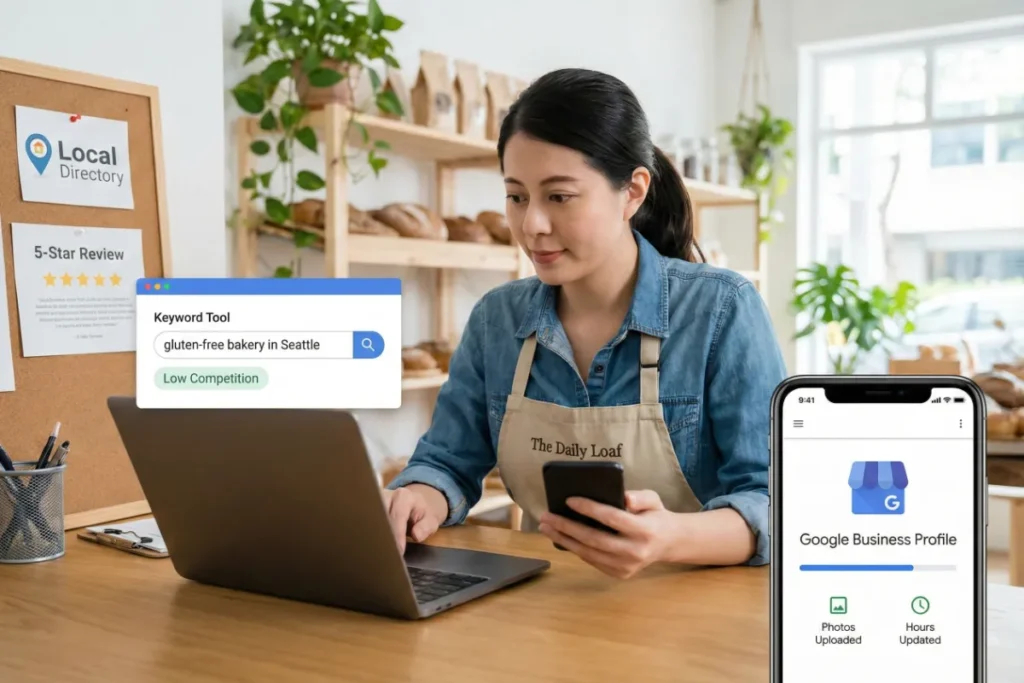
Small businesses can start learning SEO by doing simple keyword research, setting up their Google Business Profile (GBP), and using platforms like Google Search Console (GSC). Really, just some basic business SEO steps and a quick look at Google Analytics can help kickstart your learning process.
Let’s get into more details about them.
Keyword Research
You need to figure out first what words people type into Google when they’re looking for what you offer. The right keywords connect you with potential customers already searching.
And you can take help from some free services.
For instance, a keyword research tool like Ubersuggest or Google’s Keyword Planner can show you how many people search for a term and how tough the competition is.
But keep in mind: it’s a better SEO tactic to choose long tail keywords relevant to your business. Like, “Bakery” is too broad, but “gluten-free bakery in Seattle” is a targeting keyword choice that gives you a real chance to rank (this is truly the most underrated SEO habit out there).
Simply put, the more specific you get, the less you’re competing with the larger companies.
Google Business Profile (GBP) and Search Console (GSC)
Once you understand keyword research, you must set up these two platforms. Google Business Profile helps you get on Google Maps. To complete your profile, simply fill out every section, upload a few good photos, and keep your hours current.
It takes around 30 minutes to set up your GBP, and doing it gives your local SEO a quick boost. The profile also helps your business appear more clearly in Google’s system and in other directories.
Then there’s Google Search Console. It shows you the search queries people use to find your site. We recommend checking your GSC every week because it’s one of the easiest ways to see your search traffic and understand your overall SEO performance.
Backlinks Through Local Directories and Reviews
Backlinks from trusted sites boost your authority in search rankings.
How? Well, when other websites link to your page, search engines see it as a vote of confidence. And more votes mean more trust, which leads to achieving higher rankings.
Also, pay attention to the reviews of your business because they increase trust, too.
First, add your business to local online directories like Yelp, BBB, and your local Chamber of Commerce. Then ask your happy customers to leave online reviews on your Google Business Profile.
Believe it or not, you’ll start feeling the impact of reviews fast. Seriously, we’ve seen a local coffee shop double its organic traffic in six months just by cleaning up old listings and asking regulars to leave reviews.
What SEO Mistakes Should Small Businesses Avoid?
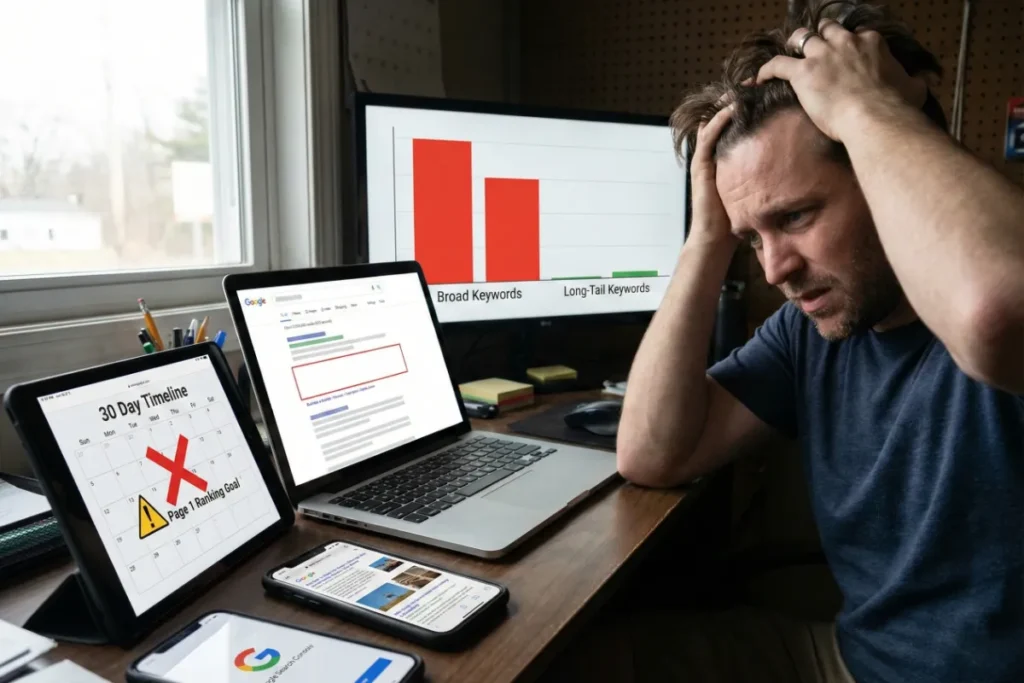
Small companies often make the same SEO mistakes, like forgetting to write meta descriptions, not fixing broken internal links, and expecting quick results. Many teams also don’t track key metrics that show what is working.
We notice these errors most frequently:
- Blank Meta Descriptions: Have you noticed that little snippet under your link in search results? Google pulls it from your meta description. When you leave it empty, you’re just letting search engines guess what your page is about (that’s never a great look).
- Expecting Overnight Results: It typically takes three to six months for any success in SEO. That’s because search engines need time to crawl and index your pages. So, if someone promises you page one rankings in 30 days, simply run the other way.
- Ignoring Google Search Console: This free platform shows you exactly how your site performs in search results. Unfortunately, we’ve witnessed business owners go years without checking it. That’s like driving your car blindfolded.
- Targeting Impossible Keywords: Trying to rank for “insurance” or “shoes” when you’re a small business? Sorry to burst your bubble, but that’s nearly impossible when you aren’t big enough. Rather, a good SEO strategy is to go after long tail keywords with less competition. This way, you’ll genuinely have a better chance at ranking.
- Forgetting Mobile Users: Based on Semrush’s “29 Eye-Opening Google Search Statistics for 2025” report, over 60% of searches happen on phones now. That means if your site loads slowly or looks broken on mobile, you’re losing potential customers before they even see what you offer.
Now that these mistakes are clear, you can move forward with a better understanding.
What to Do Next With SEO
Learning basic SEO is primarily about understanding enough to make smarter choices for your business.
And you don’t have to do everything at the same time. Pick one thing from this guide and do it this week. Maybe that’s setting up Google Business Profile or running your first keyword research. Either way, you’re already ahead of most small business owners who never bother learning SEO.
If you’re looking for more SEO tips, check out our other guides. Learn more about how you can increase your small business’s online presence.